The 2026 Property Tax War: Florida’s "Zero-Tax" Revolution vs. NYC's 9.5% Hike
Deep dive into the 2026 property tax battle: Florida’s HJR 203 property tax elimination vs. NYC’s proposed 9.5% hike. We analyze the recent 93% FL migration decline, the Insurance Crisis and how global tension is affecting the U.S. real estate outlook.
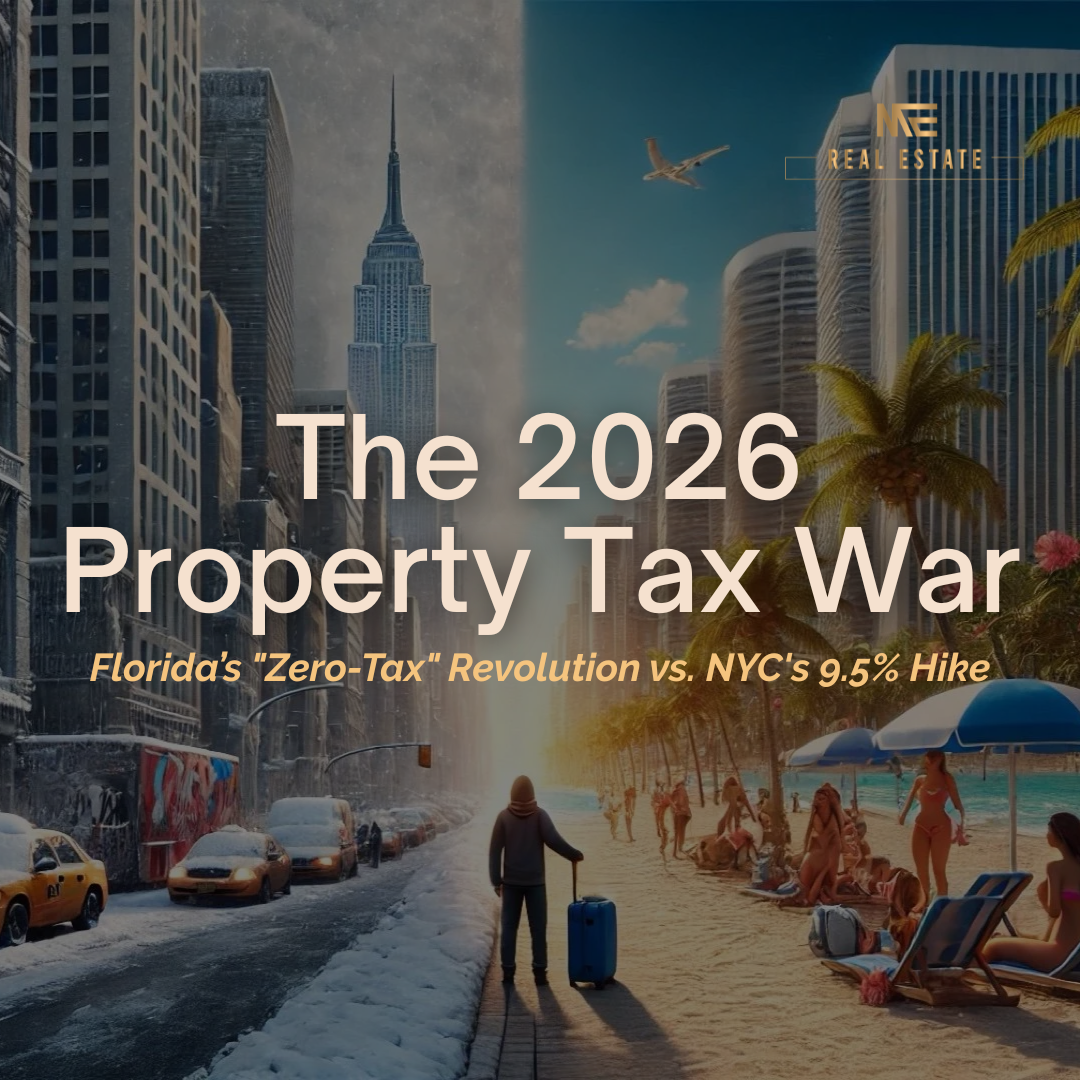
The 2026 Property Tax War: Florida’s "Zero-Tax" Revolution vs. NYC's Proposed 9.5% Hike
The American real estate landscape is witnessing a historic divergence. As the "North-to-South" migration trend enters a new, more complex phase, Florida and New York have emerged as primary case studies for two opposing economic philosophies. While Florida moves to solidify its status as a global economic superpower by fast-tracking the elimination of property taxes, New York City is grappling with a controversial reform plan that threatens to hike taxes on its long-established residential base.
A Tale of Two Cities: The Agility of Youth
To understand this shift, one must look at the "age" of these cities. New York is a legacy titan—an institutional giant with infrastructure and tax codes that have been layered over centuries. Conversely, Miami and the broader South Florida region represent a "younger" city. Miami is agile, still defining its identity, and increasingly positioning itself as a "New World" hub for tech and finance. This youth allows for bold experimentation, such as House Joint Resolution (HJR) 203, which would effectively "turn off" the tax switch for homesteaded properties (primary residences) starting in January 2027.
Florida’s "Secret Sauce" and the $4 Million-an-Hour Surge
The motivation behind Florida's tax cuts isn't just local relief; it is a calculated strategy for global dominance. Florida Chamber of Commerce President Mark Wilson recently noted that high-tax states are entering what he calls a "death spiral," as wealth moves toward more favorable climates. Currently, over $4 million in wealth flows across Florida's borders every single hour. This influx has propelled Florida to become the 15th-largest economy in the world. Wilson attributes this to a "secret sauce": a unified front between the business community and elected leaders committed to growing the private sector while shrinking the public sector.
The New York Contrast: Income vs. Property Taxes
In contrast to Florida’s push to shrink the public burden, New York residents face a "triple threat" of taxation. New York City residents are hit with federal, state (up to 10.9%), and local income taxes (up to 3.876%). Now, a new property tax reform proposal backed by State Assemblymember Zohran Mamdani seeks to overhaul the system, resulting in a projected 9.5% increase in property tax bills for many. While intended to fix valuation inequities, this added weight on a city with already high carrying costs is accelerating the exodus of high-net-worth individuals to the South.
By the Numbers: Cost & Tax Comparison
The following table illustrates the projected impact on a primary residence valued at $800,000 (assessed) under the proposed changes.
| Metric | Florida (Proposed 2027) | New York City (Proposed Reform) |
|---|---|---|
| State Income Tax | 0% | Up to 10.9% |
| Local/City Income Tax | 0% | Up to 3.876% |
| Est. Property Tax Bill | $4,800 - $6,000* | $14,500 - $18,000** |
| Year-over-Year Trend | Decrease (approx. 50%) | Increase (approx. 9.5%) |
Note: *Florida estimate assumes the elimination of non-school levies. *NYC estimate accounts for proposed rate hikes and valuation adjustments.
The Migration Reality Check: A Slowdown Since 2022
Despite the narrative of Florida as an unstoppable "stock," recent data suggests the market is entering a phase of "normalization." Since the peak migration years of 2020–2022, the pace of newcomers has moderated significantly. In 2022, Florida saw a staggering net domestic migration of over 310,000 residents. By contrast, last year that number plummeted to approximately 22,500—a massive 93% decrease in the net inflow of residents from other states. This shift proves that the market is no longer just about "vibes"—it's about the math.
While Florida’s home insurance premiums have increased dramatically in some areas, it is important to acknowledge that every state faces its own environmental "math." Last year we saw intense flash floods in North Carolina and record-breaking rainfall and flooding in New York, as well as blazing wildfires in California, proving that climate risks are a national challenge, not just a local one. Each state has its own "risk premium" that homeowners must now calculate.
In the Northeast, residents grapple with increasingly volatile "shoulder seasons"—where extreme blizzards, ice storms, and sudden urban flooding can paralyze legacy infrastructure for days. New York’s recent history is dotted with these "unprecedented" events that strain a system built for a different era of climate.
Florida, by contrast—and "knock on wood"—has become accustomed to managing its own seasonal rhythms. While the West Coast has faced significant challenges, the East Coast of Florida has remained remarkably resilient. In recent memory, the Atlantic side has primarily experienced mild hurricanes and tropical storms, avoiding the devastating direct hits that have impacted other regions. For many South Floridians, a tropical storm is a known, manageable event—a sharp contrast to the unpredictable, bone-chilling intensity of a New York blizzard or the catastrophic basement flooding now seen in legacy Northern cities.
Global Hesitancy: The Macro Factors Holding the Market
The current market stagnancy isn't just a Florida story; it’s a global one. We are seeing extreme "hesitancy" as investors watch escalating war tensions in the Middle East, particularly involving the U.S. and Iran. This geopolitical friction is driving a flight to safety, with people "holding on to their chips" rather than deploying capital. As a result, many foreign investors are diversifying into currencies like the Euro or the Canadian Dollar, which are currently thriving while the global climate remains on its toes regarding U.S. stability.
Locally, this unease is compounded by a wave of social and governmental controversy. The recent release of the Jeffrey Epstein case files has brought a spotlight back to issues of government corruption and lobbying with foreign powers. As shocking details and names appear in these files, public sentiment has shifted toward deep skepticism. Between the swirling controversies on social media and the uncertainty of global leadership, many people are simply waiting to see what happens before making their next big move in real estate and beyond.
The Bridge: A Strategic Pause, and Strategic Moves in a Shifting World
While the headlines are currently dominated by global friction and the unsettling revelations within the Epstein files, it is crucial to distinguish between a permanent market decline and a strategic "wait-and-see" period. This global hesitancy has created a rare window of opportunity for domestic buyers.
As foreign capital momentarily sits on the sidelines—distracted by geopolitical tensions and currency fluctuations—the aggressive tax reforms being proposed in Tallahassee are positioning Florida to be the first state out of the gate once the dust settles. We are not just witnessing a cooling of the market; we are witnessing a relocation of the world’s financial "safe harbors" toward cities that are still in their prime growth phase.
Market Outlook: A Young City’s Advantage
The future of these two markets hinges on their ability to maintain stability.
Florida is betting that its younger, more flexible infrastructure can absorb a $14.8 billion revenue hole by attracting more "A.I. giants" like Palantir, Amazon and other tech giants. By lowering the carrying costs of a home, Florida becomes a permanent "safe harbor" for capital.
New York is doubling down on its institutional strength, attempting to fund social investment through increased levies. The risk is that in an era of mobile wealth, prestige may no longer be enough to keep residents who are being offered a tax-free alternative in a city that is still in its prime growth phase.
Conclusion
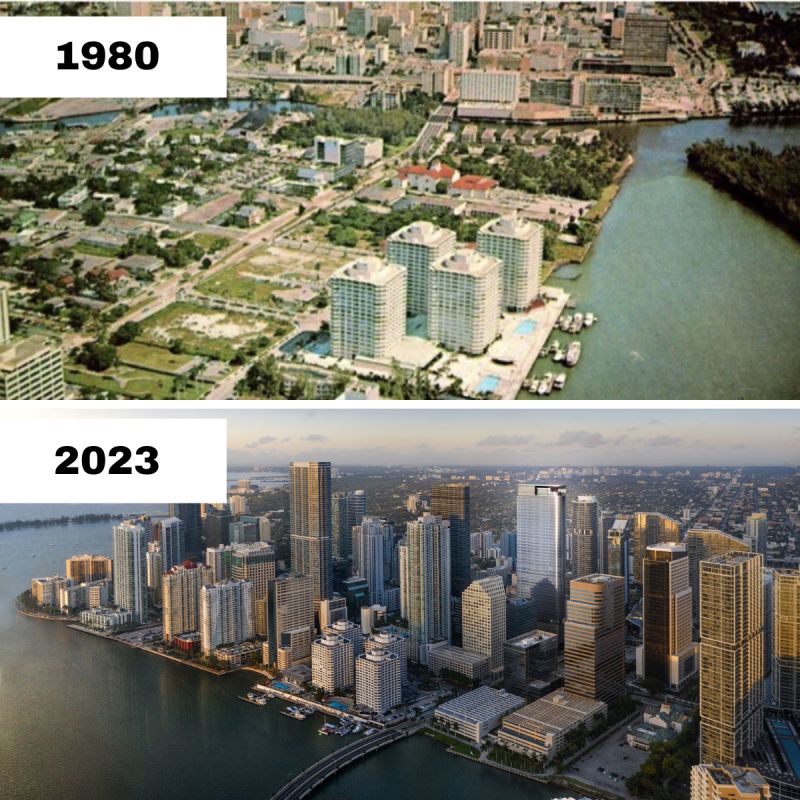
As Miami continues its ascent as a global hub, it proves that youth is a powerful economic asset. For real estate investors, the choice increasingly comes down to the bottom line: do you invest in a legacy system facing a fiscal cliff, or a younger city that is actively rewriting the rules of the game? The window for South Florida real estate remains open, but as the world waits for the dust to settle on global tensions, the market has clearly shifted from "vibes" to a calculated wait-and-see approach.
Ultimately, this is the sunshine state. Florida is one of the most sought after destinations in the world. Miami, Fort Lauderdale and West Palm Beach are growing faster than the roads can handle, and quality single-family homes have never been harder to come by. Despite the dramatic increase in active inventory across the state, the demand to own a desirable home in the best neighborhoods of South Florida has never been higher. As rates continue falling, (now entering the mid-upper 5% range) and housing affordability showing signs of positivity, it will be interesting to see how the Florida markets respond in the next 12 to 24 months.
Ready to navigate the Florida housing market with a lifelong local? Contact me for a free expert consultation at 954-257-3393.
Disclaimer: The tax changes discussed in this article are based on current legislative proposals (HJR 203 in Florida and the Mamdani Reform in NYC) and are subject to voter approval and final legislative action. Real estate market data and migration statistics are based on 2026 reports and are subject to change. Please consult with a tax professional, legal counsel, or financial advisor regarding your specific situation before making investment or relocation decisions.
Reference Sources:
https://www.flsenate.gov/Session/Bill/2026/00203/?Tab=BillText
https://www.thecity.nyc/2026/02/25/property-tax-bill-value-rate-reform-mamdani/